26 Nov 2025
What is "compliance & reporting" at Sonar?
What is “compliance & reporting” at Sonar?
2025.11.26
Introduction
SonarSource’s “Compliance & Reporting” module is designed to make it demonstrably traceable whether a given piece of code — be it written by humans, open source or even AI-generated — complies with the relevant standards, regulations and security requirements.
The goal is not merely to improve code quality, but to ensure compliance automatically during development, integrated into the existing CI/CD pipeline, with audit-ready evidence available at all times.
The traditional challenges
In modern software development, meeting compliance requirements is no longer optional; it is a fundamental business and security prerequisite. Various standards — such as PCI DSS, HIPAA, SOC 2, STIG or various industry compliance frameworks — set increasingly complex expectations regarding code quality, data handling and the application of security controls. In practice, however, meeting them is often extremely cumbersome, especially if the organisation still relies on manual tools. In many places, checking code compliance is based on slow, monotonous workflows in which developers or quality assurance specialists have to review code snippets one by one, document the defects and then collect evidence for audits. This is not only resource-intensive but also carries a significant risk of error.
The specifics of the audit environment make the situation even more difficult. During an audit, every claim must be based on verifiable evidence, which means that organisations must support with detailed and traceable documentation that their code genuinely meets the requirements prescribed by the standards. In practice, this often takes the form of separate Excel spreadsheets, screenshots, manually compiled reports and informal notes, which can take many hours or even days to prepare. Moreover, updating and maintaining manual documentation is usually neglected, so by the time of the audit it often no longer accurately reflects the current state of the system. This also distracts developers, since instead of building new features they are forced to deal with administrative tasks.
The greatest risk, however, arises when compliance problems are discovered late, in the testing phase or just before release. In such cases a drastic rewrite is often needed, which can stall the entire development process, lead to missed deadlines and generate significant costs. If the defects are security-related — for example in the form of vulnerabilities, improper data handling or missing controls —, late detection can even entail business risk, reputational damage or legal consequences. This is precisely why it has become so important for compliance checking to become an integral part of development: automated, consistent and traceable, from the moment the code is written.
How SonarQube helps: in automated compliance
SonarQube makes compliance transparent and automated in the following ways:
- Centralised rule management — every project follows the same quality and compliance rules, so development work becomes consistent.
- Automatic audit trail — defects, vulnerabilities, changes and fixes are recorded automatically, so they can easily be traced during an audit.
- “One-click” reports — reports compiled according to various standards (OWASP Top 10, PCI DSS, CWE Top 25, STIG, etc.) can be generated at any time.
- CI/CD integration and PR checks — analysing pull requests and branches guarantees that non-compliant code does not get into the main branches.
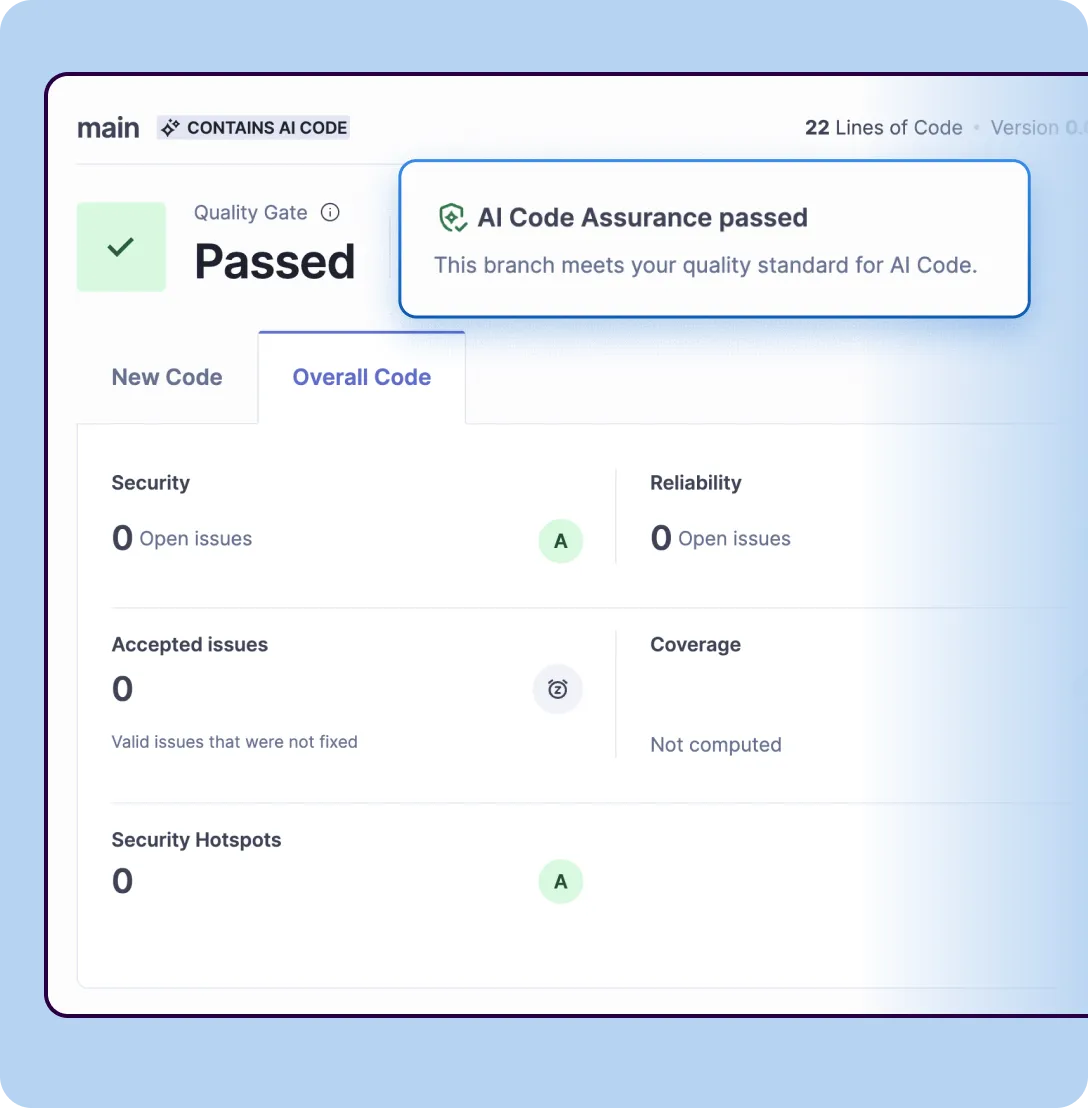
- Quality gates and customisable standard profiles — the system can be configured to let code through only if it meets every requirement.
- SCA and SBOM support — the licences and security status of external components are checked automatically, including the software bill of materials.
In practice
Compliance & reporting is not just a supplementary feature: in modern development culture it provides a framework that builds compliance into everyday development. This is particularly useful for organisations that operate in a regulated environment, have audit obligations or develop critical systems.
Sonar’s solution is therefore not just a code quality checking tool, but an integrated compliance system capable of supporting development, audits, security and organisational rule-following at a systemic level.